SIRI Spotlight
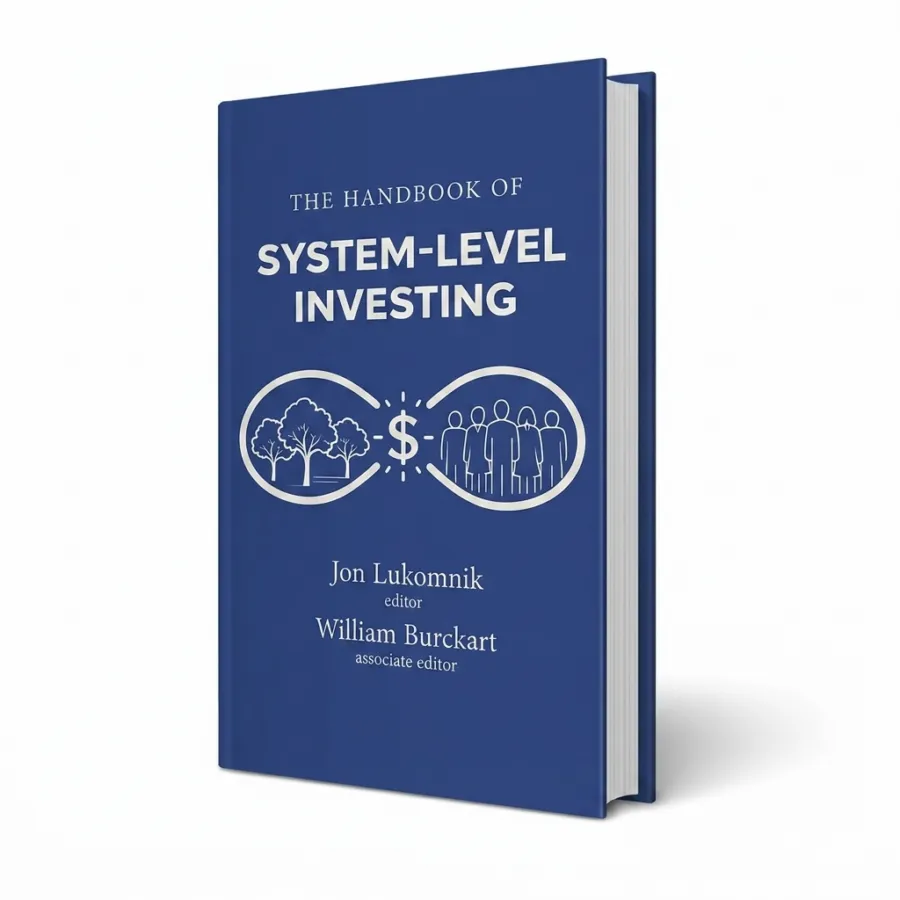
Two SIRI Adjunct Professors Shining a Light on Systemic Risk, Opportunities and System-Level Investing Around the World
The launch of The Handbook of System-Level Investing on April 14 marked a significant milestone not only for its editors, SIPA Adjunct Professors and Brandmeyer Fellows, Jon Lukomnik and William Burckart, but for the broader field of sustainable finance. Held in conjunction with the 5th Annual Symposium on System-level Investing in New York, the event brought together leading practitioners, academics, and institutional investors for a discussion that reflected both the urgency and the maturation of this emerging discipline.
The symposium provided an ideal forum for the book’s debut. Over the past five years, the gathering has evolved into a focal point for those grappling with the limitations of traditional portfolio theory in addressing systemic risks—climate change, inequality, biodiversity loss, geopolitical friction, disinformation —that cannot be diversified away. The Handbook positions itself squarely within that conversation, offering a structured, deeply informed exploration of how investors can move beyond firm-level optimization toward system-level outcomes.
A central strength of the volume is the caliber and range of its contributors, who, in the aggregate, manage more than $5.5 trillion in assets. The book brings together voices from across the global investment ecosystem: asset owners, asset managers, investment consultants, policymakers, and scholars. Moreover, the book bridges theory and practice, with leaders from major pension funds, multilateral organizations, and academic institutions addressing different facets of system-level investing—from fiduciary duty and governance to implementation strategies and measurement frameworks.
Nippon Life Insurance Company provides a detailed look at how one of Japan’s largest life insurers is approaching system-level considerations. University Pension Plan Ontario explains how to organize an investment organization aligned with system-level investing principles, both in structure and culture. BNP Paribas writes about system-level investing for asset managers, and experts at Wespath Benefits and Investments co-authored a chapter with Allianz Investment Management on how to maximize the impact of systemic stewardship. Their present in the book, along with many others from the UK to Australia, underscores the global scope of the conversation. Indeed, discussions are already underway for a Japanese edition of the Handbook, reflecting both the inclusion of Japanese perspectives in the book and the growing relevance of system-level thinking in that market.
If the New York launch demonstrated intellectual momentum, the immediate aftermath underscores the book’s practical resonance. Investors for Purpose has already organized a London launch on May 20, where Lukomnik and Burckart will continue the dialogue with a European audience. Burkart will also speak at The Marshall Institute at the London School of Economics for another launch event on May 21st, and Lukomnik will be presenting to two major Dutch pension plans, APG and PGGM, that same week. The speed with which those events were arranged—and the level of interest it has generated—speaks to the demand for actionable frameworks in this space.
“The conversation about system-level investing has evolved from theory to practice. Yes, investors are interested in the ‘why” of system-level investing, but now they are grappling with the ‘what’ and ‘how’,” said Lukomnik and Burckart.
As further evidence, they cited recent gatherings in Sydney in March and London in February—co-organized by The Investment Integration Project, Principles for Responsible Investment, the Investor Group on Climate Change, Impact Investing Australia, and the University of Melbourne—which have focused explicitly on moving from theory to implementation.
Closer to home, the book will be featured at the upcoming “Symposium on Corporate Responsibility & Responsible Investment: Past, Present, and Future” on May 7-8 in Low Library, convened by SIRI, High Meadows Institute, and the Corporate Responsibility Initiative at Harvard’s Kennedy School. The book will also be featured at the forthcoming annual convening of the Impact & Sustainable Finance Faculty Consortium in Maastricht—a global network of more than 450 professors and instructors across over 250 universities.
For SIPA, the success of The Handbook of System-Level Investing reflects the school’s broader mission: to bridge theory and practice in addressing global public challenges. Lukomnik and Burckart’s work exemplifies this approach, translating rigorous thinking into frameworks that can be applied by some of the largest pools of capital in the world.
As the conversation continues at Columbia, in London, the Netherlands, Japan, and beyond, the Handbook appears poised to play a central role in shaping how investors think about their responsibilities—not just to portfolios, but to the systems that underpin long-term value creation.